Modern consulting firms are under constant pressure to deliver faster insights, deeper analysis, and consistent reporting — all while managing increasing client expectations.
Traditional workflows, heavily dependent on manual research and report creation, simply don’t scale.
This is where AI agents powered by Large Language Models (LLMs) are transforming how businesses operate.
In this case study, we explore how StratEdge Consulting (UK) leveraged AI agents and LLMs to automate research workflows, improve efficiency, and scale high-quality deliverables.

StratEdge Consulting specializes in delivering business strategy, research, and reporting services to global clients. However, as demand grew, several challenges emerged:
1. Time-Intensive Research Processes
Analysts were spending hours collecting, analyzing, and summarizing data from multiple sources.
2. Inconsistent Report Quality
Manual workflows led to variations in structure, tone, and output quality across different teams.
3. Difficulty Handling Unstructured Data
Large volumes of unstructured data (documents, reports, web insights) made analysis slow and complex.
4. Scalability Limitations
Increasing output meant increasing manpower — which is costly and inefficient.
👉 StratEdge needed a solution that could automate research, standardize outputs, and scale effortlessly.
🤖 The Solution: AI Agents + LLM-Powered Automation Platform
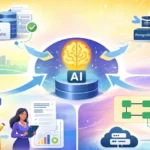
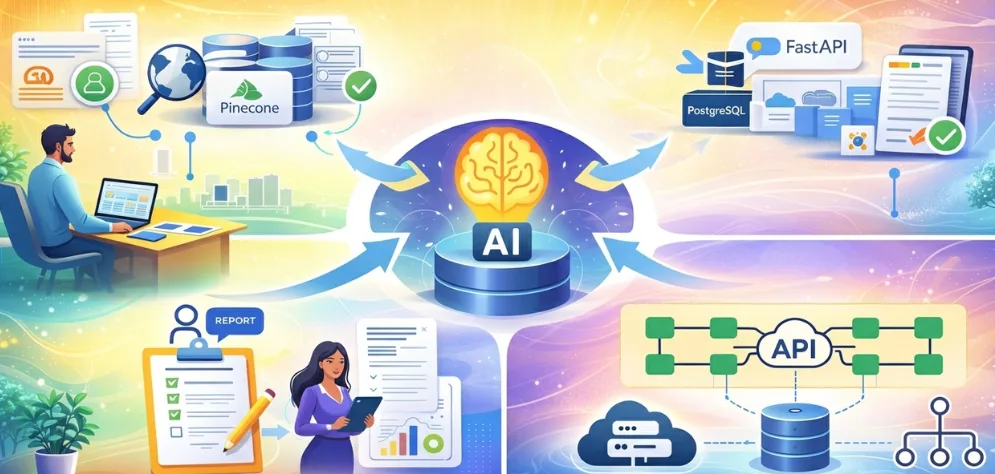
To address these challenges, we built a custom AI automation platform powered by LLMs and intelligent agents.
This system transformed how StratEdge handles research, reporting, and client deliverables.
🧩 Core Components of the Solution
1. AI Agent for Research & Report Generation
At the core of the system is an AI agent that:
- Processes complex research queries
- Extracts key insights from multiple sources
- Generates structured, human-like reports
👉 This replaces hours of manual work with minutes of automated intelligence.

2. Retrieval-Augmented Generation (RAG) Pipeline
To ensure accuracy and reliability:
- A RAG pipeline integrates trusted data sources
- Pinecone vector database enables fast retrieval
- Outputs are grounded in real, verifiable information
👉 This ensures high-quality, fact-based responses — not generic AI output.

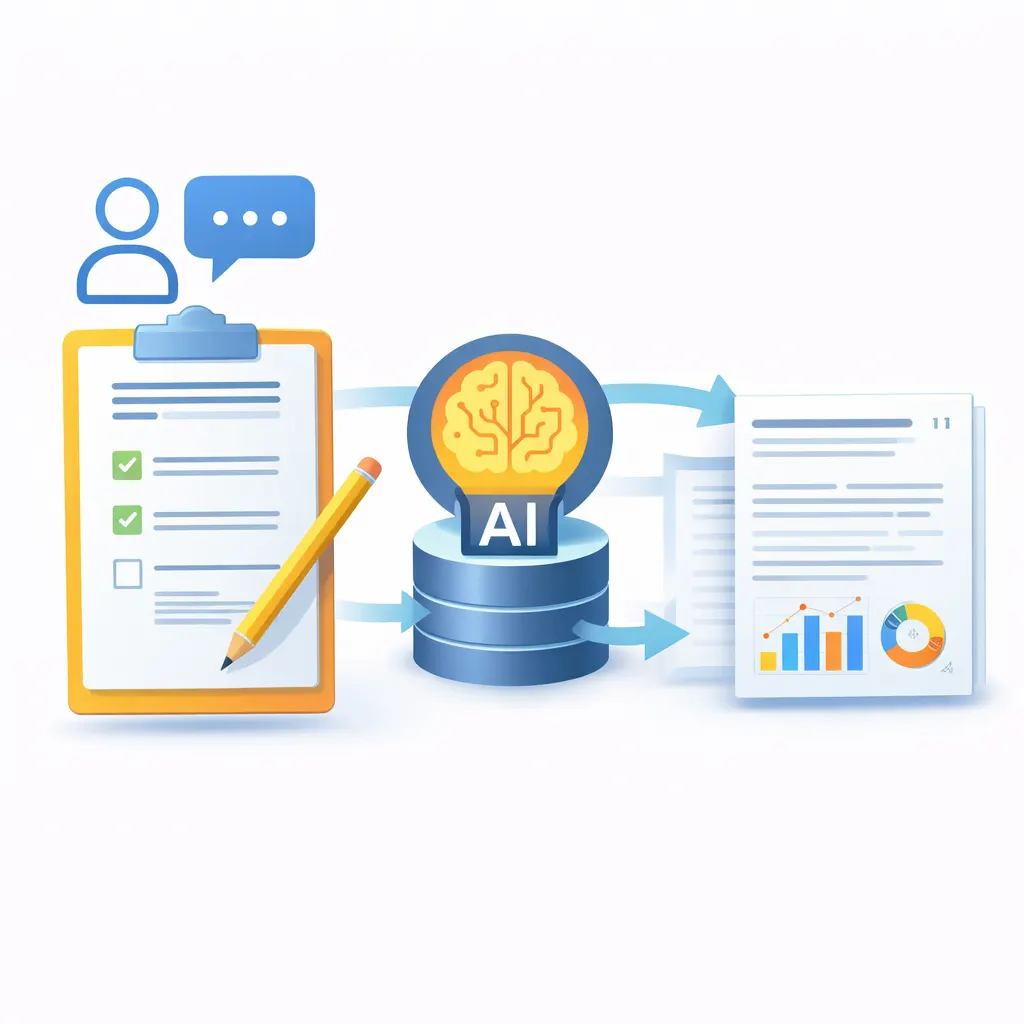
3. Prompt-to-Report Automation
Analysts simply provide:
- High-level prompts
- Key instructions or requirements
The system then:
- Generates detailed, structured reports
- Maintains consistent tone and format
- Produces editable drafts ready for review
👉 This dramatically improves speed, consistency, and productivity.
4. Scalable & Modular Architecture
The platform was built using:
- FastAPI for modular services
- Docker for scalable deployment
- PostgreSQL for data management
👉 This makes the system flexible, scalable, and easy to maintain.

⚙️ Technology Stack
The solution leverages a modern AI and backend stack:
- LLM Engine: OpenAI GPT-4
- Framework: LangChain
- Vector Database: Pinecone
- Backend: FastAPI
- Database: PostgreSQL
- Infrastructure: Docker
👉 A powerful combination enabling enterprise-grade AI automation.
📊 AI Automation Impact Overview
| Area | Before AI Implementation | After AI Implementation |
|---|---|---|
| Research Process | Manual, time-consuming, repetitive | Automated with AI agents and LLMs |
| Data Handling | Difficult to process unstructured data | RAG pipeline enables structured, accurate output |
| Report Generation | Hours of manual effort | Generated in minutes with AI |
| Output Consistency | Varies across teams | Standardized tone and structure |
| Analyst Productivity | Focus on data collection and formatting | Focus on strategy and decision-making |
| Scalability | Limited by team size | Easily scalable without increasing headcount |
| Turnaround Time | Slow delivery | Faster client delivery |
| Accuracy & Insights | Depends on manual interpretation | AI-assisted, data-backed insights |
The implementation of AI agents and LLMs delivered significant improvements:
⚡ Efficiency Gains
- 90% reduction in manual research effort
- Analysts shifted focus from execution → strat
📄 Faster Report Generation
- Significantly reduced turnaround time
- Reports generated in minutes instead of hours
- Improved client satisfaction with faster delivery
🤖 Scaled AI Adoption
- 10,000+ reports generated using AI in 6 months
- Seamless adoption across teams
📈 Consistent Output Quality
- Standardized report structure and tone
- AI ensures brand-aligned communication
- Reduced variability across teams
🏢 The Bigger Picture: From Manual Work to Intelligent Systems
“Our team now focuses on strategy while the system handles repetitive research — the results speak for themselves.”
This transformation highlights a bigger shift:
- From manual workflows → AI-driven systems
- From time-consuming research → instant insights
- From limited scalability → exponential output
AI agents are not just tools — they are becoming digital teammates.
- AI agents can automate complex research and reporting tasks
- LLMs enable natural, structured, and high-quality outputs
- RAG ensures accuracy and data grounding
- Businesses can scale operations without increasing headcount
- Teams can focus on high-value strategic work
🧾 Final Thoughts
StratEdge Consulting’s success shows how AI agents and LLMs are redefining business automation.
By combining intelligent systems with scalable architecture, organizations can unlock:
- Faster execution
- Better decision-making
- Higher operational efficiency
This is not just automation — it’s a new way of working.
At Aigentora, we design and deploy AI-powered automation systems tailored to real business needs — from LLM agents to workflow automation.
💡 Frequently Asked Questions
AI agents are intelligent systems that can perform tasks like research, data analysis, and report generation with minimal human input. They use large language models to understand context and execute workflows. This helps businesses automate repetitive processes and improve efficiency.
Large Language Models (LLMs) process and generate human-like text based on input data and prompts. They can summarize information, generate reports, and analyze unstructured data. This makes them highly effective for automating knowledge-based tasks in businesses.
RAG is a technique that combines LLMs with external data sources to improve accuracy. It retrieves relevant information from databases before generating responses. This ensures outputs are more reliable, factual, and context-aware.
StratEdge Consulting used AI agents to automate research workflows and generate structured reports. Analysts provided high-level prompts, and the system produced detailed outputs. This reduced manual effort and improved consistency across deliverables.
AI helps consulting firms reduce manual workload and improve productivity. It enables faster delivery of insights and ensures consistent, high-quality reports. Additionally, it allows teams to focus more on strategic decision-making rather than repetitive tasks.
AI does not replace analysts but enhances their capabilities by automating repetitive work. It supports better decision-making by providing faster insights and structured outputs. Analysts can then focus on higher-value strategic tasks.
AI automation platforms typically use LLMs, frameworks like LangChain, and vector databases such as Pinecone. They also rely on APIs, backend systems like FastAPI, and scalable infrastructure like Docker. These technologies enable efficient and reliable automation.
AI can quickly analyze large volumes of data and generate structured, human-like reports. It ensures consistency in tone, format, and quality across all outputs. This significantly reduces the time required for manual report creation.
Yes, AI automation is highly scalable because it can handle increasing workloads without requiring additional manpower. Systems can process multiple tasks simultaneously with consistent performance. This makes it ideal for growing businesses and enterprises.
AI is expected to become a core part of business operations, handling complex workflows and decision support. Advanced AI agents will act as digital teammates across departments. This will lead to faster innovation, improved productivity, and smarter business processes.